
Case study
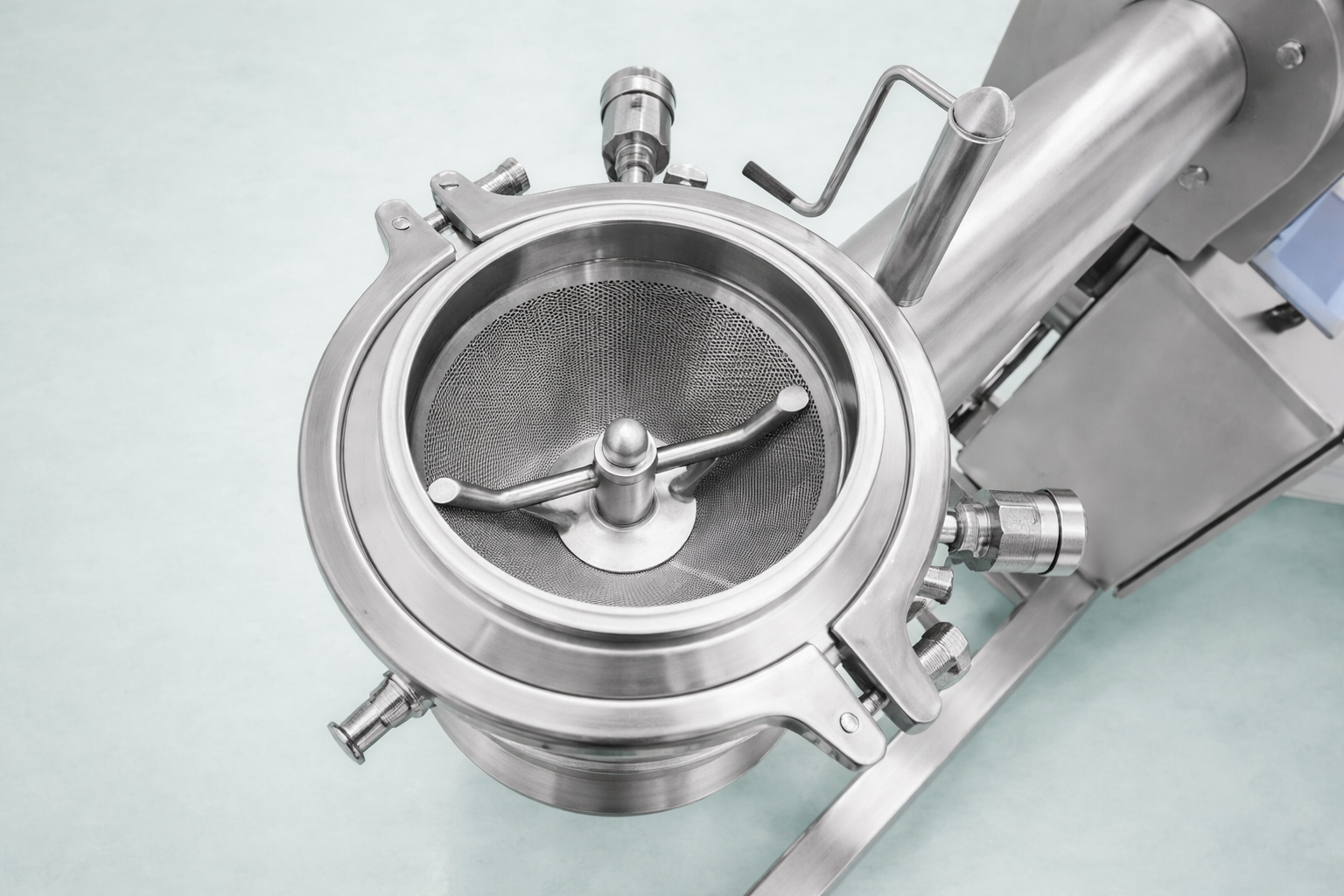
In vacuum drying processes using Nucha-type dryers or paddle dryers—equipment commonly used in the pharmaceutical and fine chemical industries—filter elements operate under particularly demanding conditions:
- Sustained high temperatures
- Continuous exposure to solvent vapors (acetone, ethanol, isopropanol, THF, among others)
- Repeated thermal cycles in chemically aggressive atmospheres
In this operating environment, the structural integrity of the filter cartridge is not a minor detail, but a critical factor in ensuring process safety, final product quality, and operational continuity of the plant.
The identified challenge
During dryer operation, recurrent failures were detected in the filter cartridges. The root cause was not the filter media itself, but the bonding area between the media and the cartridge end caps.
The main issues observed were:
- Partial or total detachment of the end caps
- Separation of fastening elements
- Potential batch contamination risk
- Unplanned production shutdowns
These failures appeared after only a few operating cycles and coincided with drying phases involving high solvent vapor presence and temperatures above 90–100 °C.
Critical design point: the structural adhesive
Technical analysis revealed that the adhesive used in cartridge assembly was a determining factor in overall reliability.
Two solutions were evaluated:
- Technical Polyurethane: A flexible, commonly used adhesive with adequate performance in standard applications, but limited resistance to aggressive solvents and high temperatures.
- Technical Epoxy: A rigid structural adhesive with high thermal and chemical resistance, and long-term dimensional stability.


Implemented solution
A design modification was introduced, replacing the polyurethane adhesive with a technical epoxy specifically selected for its chemical and thermal compatibility with actual process conditions. All other cartridge parameters—filter media, geometry, and dimensions—remained unchanged, allowing for a direct comparison of in-service performance.
Impact on GMP compliance and process safety
The cartridge bonding system is not a minor construction detail. Its stability directly affects assembly integrity and overall process robustness from a GMP perspective.
- Reduces the risk of particle generation due to adhesive degradation
- Maintains structural integrity during thermal cycles and solvent exposure
- Contributes to filtration performance stability and reproducibility
- Decreases the probability of deviations linked to progressive bonding deterioration
- Supports safer and more controlled operating conditions
Results achieved
Following implementation of the epoxy adhesive, the results were conclusive:
- Elimination of end cap detachment failures
- Significant increase in filter cartridge service life
- Reduction in unplanned maintenance
- Preservation of structural integrity throughout the entire drying cycle
- Process safety validation and documentation
Technical conclusion
In vacuum drying applications involving continuous solvent exposure, selection of the structural adhesive is a key factor in ensuring the reliability and safety of the filter cartridge. This case demonstrates that, in Nucha-type dryers, the use of technical epoxy adhesives provides clearly superior chemical and thermal resistance compared to polyurethane, ensuring:
- Assembly tightness
- Process integrity
- Final product protection
In critical industrial environments, the difference between a standard solution and a technically appropriate one can determine the operational stability of the entire facility.
If your Nucha dryers operate with solvents and high temperatures, optimize the reliability of your filter cartridges with a technically sound solution.
Contact our technical team to improve the safety and stability of your process.